Admit it – who doesn’t love a book with a great mind-twisting shock? We live for them! Here are some great reads that will surely make you yell, “I knew it!”
Fight Club follows the story of an unnamed protagonist suffering from insomnia. To deal with his condition, he teams up with someone called Tyler Durden and establishes an underground fighting club as a radical form of psychotherapy.
The club soon grows into a nationwide fascist group, and Tyler uses it to spread his anti-consumerist ideas, recruiting more members to take part in plans to bring down corporate America. As the pranks become increasingly elaborate and dangerous, our protagonist realises that he doesn’t want to be a part of it.
His efforts to stop Tyler are in vain, and it is only at the end that our protagonist learns about his true relationship with Tyler.
If you think that Gone Girl is the most twisted Gillian Flynn book, think again.
Sharp Objects follows the story of newspaper journalist Camille Preaker, who returns to her hometown to investigate the brutal murders of two girls. While investigating, she tries to reconnect with her estranged mother Adora and half-sister Amma.
Unfortunately, Camille never had a good relationship with her mother, who has always preferred her deceased younger sister Marian. Marian died of an unspecified illness when Camille was young, and Amma, who was born after Marian’s death, is now a spoilt teen.
After an investigation that is fraught with mind-blowing reveals of Adora’s dark secrets, Adora is eventually arrested for the murder of Marian and the two girls.
However, in a shocking twist, we find out that Adora isn’t the only murderer.
Alma Rivera, her husband Arturo, and daughter Mirabel, emigrate from Mexico to America on a work visa obtained by Arturo. The family has to leave their rich life behind in Mexico to provide their daughter the educational and medical resources she needs after suffering a head injury.
But life in America is more challenging than expected – the family finds it difficult to adjust as they do not know English. It doesn’t help that Arturo’s job of picking mushrooms is also degrading and monotonous.
They have to quickly learn who to trust and protect themselves from. And even though they form a close bond with a Panamanian family living in the same apartment building, drama and conflict soon ensue.
The ending sees a shocking death that sends the family (and us) spiralling into a black hole of sadness.
The title alone is enough to let us know that this book is going to be chock-full of twists and surprises!
The wealthy, seemingly perfect Sinclair family spends every summer on their private island. The book’s protagonist, Cadence, recalls her life and every summer spent there except for Summer Fifteen – the year that she meets a horrible accident which causes her memory loss.
Her mother refuses to disclose the details of what happened to Cadence during Summer Fifteen. When Cadence finally returns to the island, everything is different.
The Liars – cousins and friends of Cadence who spend their summers at the island too – are nervous and secretive around her. Over time, Cadence’s memory slowly returns, including her memory of her relationship with an Indian boy, Gat. Her gradual revelations and the big ending will leave you completely shell-shocked.
Over time, Cadence’s memory slowly returns, including those on her relationship with an Indian boy, Gat. Her gradual revelations and the big ending will leave you completely shell-shocked.
This is one of those books that draw you in from the very first sentence: “Gil Coleman looked down from the first-floor window of the bookshop and saw his dead wife standing on the pavement below.”
The plot revolves around the mysterious disappearance of Ingrid, an unhappy wife and mother. She writes letters to her husband and hides them in the thousands of books he has collected, instead of giving them to him. When she has written her last letter, she disappears from a Dorset a beach in Dorset, leaving her husband and two daughters behind.
Did she run away? Or did she kill herself? With the narrative shifting between the past and present, you’ll gradually piece the clues together and it seems easy to know how the ending will turn out.
But don’t be fooled! The last chapter is sure to blow up any idea you had of where this book was taking you.
can you imagine how freaky shark mermaids would be like unlike sharks, shark mermaids would have actual arms/hands and could rely on touching things with their hands to see if they’re prey rather than having to bite like sharks do. like youre just swimming in the ocean and suddenly you feel a strong grip on your leg, you freak the FUCK out because uh what????? the fuck??? youre swimming alone in the ocean??
a head pops out of the water, dorsal fin pointed from its back and it just points at you and says in a low whisper: “i thought you were a seal. please dont swim alone like this, im sorry i scared you i just wanted to see what you are” and then disappears back into the depth. what the fuck.
Hello, I was wondering if it would be possible for a man’s armor to weigh him down enough to cause him to drown? Like of he were on a ship and was wearing really heavy armor, and he fell off the ship would be be unable to float
The short answer seems to be: yes, though that’s not really a full answer.
Generally speaking, the position is you can’t swim in full plate, and this appears to be mostly true. The extra weight and lack of articulation mean it will be much harder for you to break surface. In deep water, for example during a naval engagement, this is likely a death sentence.
Worth noting that full plate, usually, only weighed around 70 pounds at the most. (Your average full plate combatant would be wearing around 50lbs of armor.) It was entirely possible for someone wearing this to recover after being knocked down, and while there is some impaired mobility, the wearer still has plenty of freedom to actually fight, and move around their environment. Heavy armor doesn’t mean you’re trapped like a bug, if you fall over.
The weight is a factor. Any extra weight will reduce buoyancy, and making swimming much more difficult. Plate armor is quite capable of weighing you down, to the point that it really is possible (if dangerous) to walk along the bottom, while wearing heavy armor.
I’m aware of testing in the last decade, where someone attempted to swim in armor, and the results were mixed. He could, barely, and was unable to break the surface from a depth of 12ft (roughly 4m). Now, it’s possible that someone who was fully accustomed to fighting in plate may do better, but you’re still looking at a situation where your combatant would lose energy much faster, may not be able to tread water, and if they sank, would probably die.
Plate armor also limits articulation. This isn’t to the extent that it will prevent someone to get back up if they fall, but, it does cause problems with swimming. It limits your range of motion, and slows everything down a little, which has a severely detrimental effect if you’re trying to keep your head above water. So, it’s possible to swim for short distances (though, I think all of the credible reports involve knights simply walking along the bottom, and climbing out.)
Though it’s not surprising, water is not good for armor, and salt water is particularly corrosive. Just sea spray alone would seriously rust up your character’s armor long before they saw combat. This is still an issue today, and part of why most navies used gold for their rank insignia. Gold does not corrode, meaning their insignia would survive sea conditions, where most metals would not.
The other thing is, until relatively recently, armor, beyond a breastplate, was pretty uncommon shipboard. They may have some armor, sealed away below decks, being maintained for when they made landfall, but they wouldn’t wear it, even in combat. Again, the exception may be a light breast plate, and helmet, but someone trudging around in full armor would be far less safe than someone in a shirt and coat.
Even if your character wears full armor when they’re on land, they’d probably store it below, while at sea, and carefully clean it at every opportunity.
Somewhat unrelated, but also worth knowing that, historically, it was a pain to transport horses by water. Historically, this was accomplished by placing the animal in a canvas sling, to support its weight, and prevent them from being injured by the movement of the boat (or ship), while at sea. Apparently, even under the best of circumstances, sea travel was extremely stressful for the horses, and the resulting mortality rate was high. While I don’t have any hard information, I can’t imagine that many of the animals would survive if the ship came under enemy fire.
Looping back, it’s not impossible for someone to swim with 50lbs of extra weight distributed across their body, but that will require they’re a strong swimmer. It’s not impossible for someone to swim with impaired range of motion, but that will require more energy. When you put these two things together, it’s probably not impossible for someone to swim in armor, but realistically, it’s not happening.
It’s also distinctly possible that your character wouldn’t know how to swim. Historically, particularly in the early modern period (so, during the golden age of piracy), it was surprisingly uncommon for sailors to actually learn how to swim. I’ve seen speculation for why this was the case. Some reasonable factors were that many sailors, particularly in the navies, were pressed into service, without much training beyond being able to do their assigned job. Other relevant factors include the lack of agility with helming a large sailing vessel, and as a result, if you went overboard you were doomed.
So, yes, going overboard in heavy armor would kill your character, but it’s highly unlikely they’d be in heavy armor to begin with, if they were operating aboard a ship.
Since someone will probably bring this up, if I skip over it: There’s also The Battle of Agincourt in 1415, where numerous French knights became mired in knee high mud and drowned in their armor. When you read full descriptions of the battle, it sounds like they were pressed under infantry who died on top of them, and then drowned, rather than it simply being their armor killed them. The major factor here was that combat was funneled into very tight choke points, and the mass of combatants simply piled on top of each other, like a heavily armed mosh pit from hell. As a result, any of the French fighters who fell (literally fell over, not killed), were trapped as bodies pressed in behind them, and couldn’t escape the mud.
Spent the last two days working on this little archery guide in art and writing. Considering the rise in popularity of archers in pop culture this hopefully comes in handy for a bunch of fandoms.
As an archery instructor, I can confirm that this is correct (at least regarding traditional instinctive archery). @alystraea something you might like?
I love it! ❤️ ❤️ great timing, I was planning some archery pieces with Legolas, Beleg and Celegorm. Thank you so much!!!
one of my patients came in for an emergency visit, because she snapped the wire on her retainer watching the movie when MBJ took his shirt off she clenched her teeth so fucking hard she snapped it. that is the fucking funniest shit ever to me this tiny 17 year old girl thirsting so goddamn hard she busted steel
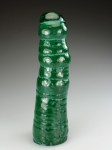
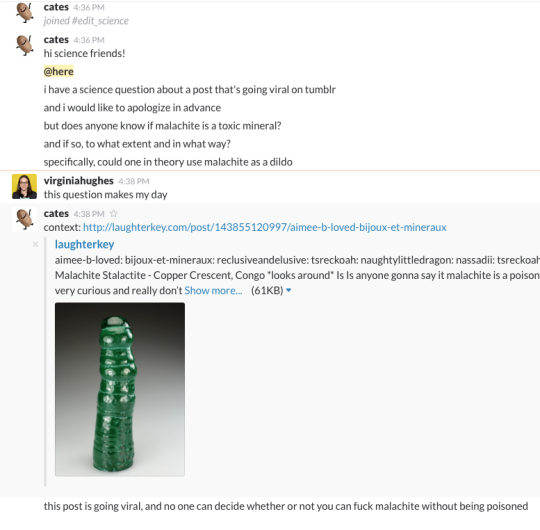
malachite is a poisonous mineral. please do not fuck the malachite stalactite
@lizaleigh do you know any rock people that can confirm/deny because I am very curious and really don’t feel like getting into a conversation with my geophysicist brother that MAY somehow get back to the fact I saw a malachite that looked like a weird dildo.
…sadly, I am not on good enough terms with any of our partner geologists to just attach this to an email with the subject line: “EXPLAIN.”
Although I think @mollisaurus is a mineral person. Thoughts?
oh geeze, i’m kinda rusty on minerals but malachite is just copper carbonate and is really common in both antique and modern jewelry so i think like if you were really gun-ho about it you could go ahead and put it wherever you want?
It’s really only a problem if you’re polishing or cutting it. The particles would be bad to breathe. It’s rather porous too, so I would worry about bacteria growing. Well, being literal anyway… Better to leave the poor thing alone. ._.
I mean it kinda depends on where you stick it because malachite does not like acidic environments very much and the malachite will degrade and also might dye your bits blue-green as the copper dissolves out.
So use a condom when fucking rocks is the takeaway here.
Oh my god guys it’s poisonous
It is super poisonous
There is a reason we do not use it in make up any more
Not even with a condom, do not fuck the rock
Try this one instead.
malachite literally explodes in water does it not?
I… no… I think you’re thinking of pure sodium?
Malachite is however water soluble, which really just means it will poison you quicker
This is both hilarious and cool as fuck because you’re getting all this information on minerals and rocks. You’re also watching people argue over wether or not you can fuck this rock
I go on hiatus for a week and come back to find tumblr molesting my post, but hey, at least we all learned something so yay tumblr, you just keep on being you.
I’m still not sure if I can fuck this rock.
I’m looking into it.
UPDATE:
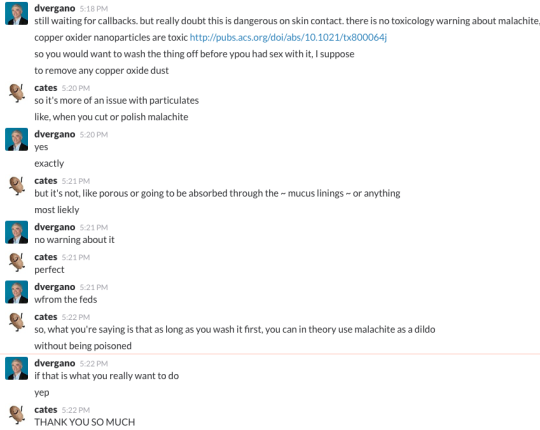
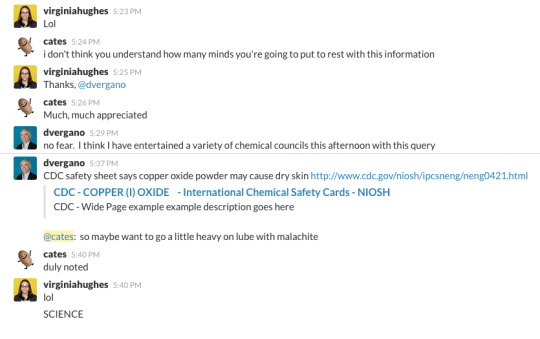
Today in “I’m so sorry, coworkers, it’s for Tumblr,” I brought this post to the attention the science reporters at BuzzFeed. Dan Vergano did a some research and weighed in on the question “Can you use malachite as a dildo or is it toxic?”
The answer is “It’s probably fine, just wash it first and maybe use a bunch of lube.”
Oh man this got so much better than the last time I saw this post
This is my favourite. Science side of tumblr: asking the REAL questions
*biologist crashes through the underbrush*
Ok so here’s the thing though
Malachite is not poisonous to YOU. BUT fucking this stalactite will probably wreck your vaginal flora and leave you with a gruesome infection within a couple days.
Want details? SO GLAD YOU ASKED, ‘CAUSE HERE THEY ARE.
• Malachite is not copper oxide. It’s Cu2CO3(OH)2. Like most carbonates it’s water soluble– that’s how it became a stalactite in the first place! And technically any given chunk of “malachite” isn’t just malachite– it’s a mix of various copper carbonates & oxides. This will become important later.
• When malachite dissolves it makes a bunch of copper (Cu++) ions. Cu++ is GREAT at killing bacteria and fungi– so good at it that sprays with Cu++ get used a lot as a spray in agriculture to stop plant disease. It takes such a large dose to harm larger organisms that copper sprays are used a lot in organic agriculture (like Bordeaux mixture).
So bottom line, yes malachite is technically nontoxic to humans. But it kills bacteria when it dissolves and releases Cu++.
• Malachite dissolves somewhat slowly in water– but vaginal secretions aren’t just any water. A healthy human vagina has a pH of 3.8-4.5 and a salinity of about 0.9%. It’s also warmer than your average underground cave at 37°C (or 98.5°F in American meat units). As luck would have it, acidity, salinity, and warmth all make malachite dissolve faster.
• In other words, the human vagina dissolves malachite.
• I have no deeper explanation for why human females can dissolve rocks with our genitals. It simply is.
• Gonna to take a quick moment to point out that sex toys that dissolve when you use them are maybe not the best investment.
• Anyway the key question now is “how fast does the human vagina dissolve malachite?” Are we talking geological timescale, a Nazis-in-Indiana-Jones situation, or something in between? If the reaction kinetics of dissolution are very slow, then there’s nothing to worry about. An encounter with a stalactite would have to last years for enough Cu++ to leach out to cause problems. If it’s quick then we’re in trouble.
• Unfortunately it looks like nobody really knows. One of the best sources on how malachite dissolves & precipitates in water– an EPA document on how to avoid too much Cu++ in municipal drinking water systems– helpfully says “The kinetic constraints on the formation of these solids in water systems are largely unexplored” (p. 42) because end equilibrium points is all you need to run a city water system safely. In other words, the experiments that would tell us how fast malachite dissolves in various types of water just don’t exist because nobody’s ever needed to know before. So we’d better assume it’s going to happen reasonably quickly, #for safety.
• So in best scientific fashion, we’re just going to bullshit our way ahead using what facts we DO have on hand: endpoint equlibria.
That orange box is how many moles of dissolved Cu++ Scaife got from sticking malachite in some water that had 0.171 moles NaCl/L (body salinity is about 0.154 moles NaCl/L so this is slightly less salty than people) at 30°C. He’s got no acidity in there, and again the salinity and temperature are slightly lower than people. But this is probably the closest we’re going to get to data on how malachite behaves in vaginas anytime soon, folks. From this we can take away that if you leave malachite alone in a vagina you’ll get AT LEAST 9.12 x 10^-4 moles/L, or 5.8 ppm, of Cu++ at equilibrium.
• Recall from above that most “malachite” isn’t actually pure malachite, it’s a mix of various copper carbonates & oxides. The EPA document elaborates: “[T]raditional ‘eyeball’ identification of malachite by its blue-green color is extremely
unreliable, because almost all cupric hydroxysulfates, hydroxycarbonates, hydroxychlorides,
and even fresh cupric hydroxide can be some shade of blue-green. … Thus, the uncertainty in the computed copper
concentration in equilibrium with malachite is at least about a factor of 2 … until further experimental data focusing on this problem is generated.”
In other words, “do your math and then double how much Cu++ you think is going to be in the water, just in case.” So that gives us 11.6ppm Cu++, at equilibrium, with malachite in a (til now!) healthy vagina.
• Next step: do we have any idea what happens to bacteria in acid conditions with copper? OH MY GOD WE TOTALLY DO. Gyawali et al 2011 checked this out in the context of “so what if we rinsed tomatoes with a solution of lactic acid and copper, because that would be a safe & organic way to get rid of E. coli?” So now this post has officially ruined stalactites, vaginas, and tomatoes.
^This would happen. These are the counts of 4 E. coli strains exposed to various levels of lactic acid & Cu++ for 8 hours. This table only shows the end counts but it represents the death of 99.7% of bacteria*.
• Losing 99.7% of your vaginal flora is seriously bad news. You’re looking at really good odds of a yeast infection, bacterial vaginosis, and/or other infection issues. And that’s if you’re lucky enough to not be in the 4% of the population or so that’s sensitive to skin contact with copper.
• The good news? Biochemically speaking, you’re probably ok to put it in your butt. It’s not as acidic or salty in there, plus there’s a huuuuuge stockpile of gut microbes right upstream that can quickly repopulate the colon after spelunking is complete. However this stalactite is not flared at the base so it is the wrong shape for putting in your butt. Do not put this stalactite in your butt.
• This all looks like fun and games, but I think it’s really interesting that the internet’s mistake in concluding that this stalactite is fuckable is very similar to the mistake made by the Flint water management system. Hear me out.
• Central to the Flint lead poisoning crisis is that authorities only looked at & tested Flint’s water in its central treatment plant before it went out through the pipes. Not after it went through the pipes. They did not consider what would happen biochemically as it went through the pipes and metals started dissolving.
• Similarly, in concluding that the stalactite is fuckable, the internet only considered the stalactite itself. Not the biochemical processes that would happen to it as it, welp, went through the pipes.
• Media frequently reports that the Flint River’s water is “corrosive,” leading many to believe the river is full of industrial waste. This ain’t the case. You’d need industry to fill a river with industrial waste, and industry left decades ago. That’s why Flint’s so poor. So what IS in the water? Road salt. Plain old stupid road salt. The old Detroit-based source didn’t have salt because it came from Lake Huron which has a large, mostly rural watershed. Meanwhile the Flint River runs through a lot of towns, making it slightly salty as everything melts down in spring. And as we recall from the stalactite experience, a little salt is all it takes to get metals to dissolve.
• Information on this engineering problem was not coming through clearly from the engineering or chemistry sides. It took a biologist, pediatrician Mona Hanna-Attisha, to document the real-time results and provide the data to kick-start a high-level investigation.
• Morals of the story: when dealing with a biological system pls consider asking a biologist, your vagina and/or city could depend on this
• Pls use a condom when fucking any water-soluble material
• Still don’t put the stalactite in your butt -3/10 do not recommend
OK, I haven’t reblogged this before now but the final post takes it to a whole new level and I can no longer resist.
IT GOT BETTER AND BETTER.
Long comment strand? Long comment strand. But SO worth the time to read, trust me.
Basically, don’t fuck the stalactite unless you want your nethers as wrecked as Flint, MI, is what I’m getting here.






























 FantasyBoudicca