today i learned that the famous “nuclear wessels” scene from star trek iv (the whale one) wasn’t scripted or staged at all. grandpa leonard (leonard nimoy, director) told nichelle and walter just to ask random people in the street in san franscisco where alameda and the “nuclear vessels” were. so they played uhura and chekov ad lib while grandpa leonard subtly filmed from a little distance away. all the people’s reactions as they walked by were genuine, and the nice brunette girl who answered their question really was a nice brunette girl answering their question. they had to chase her down and negotiate a contract to pay her for having a speaking line in the movie. and it became one of the most popular moments in the whole franchise. i love star trek.
in case you were wondering if anyone will remember your random acts of kindness:
when i was in kindergarten, i met a boy named jordan. i don’t remember meeting him. i remember knowing him when, one day before dismissal, he came up and asked if he could be my friend. i was a painfully shy kid, and he was friendly and fun and talked a lot, so i said yes. we were the kind of friends that kindergarteners are: buddies during snack time, sharing the best crayons when we colored, and never even thinking that it could go outside of the walls of our school. it was fine. it was great. i had a friend. he’s the first friend i ever made on my own. he’s the first person who made me realise that i could.
my next clear memory of jordan comes when i was in fourth grade. in the morning, i was talking to kristen, who was one of my only friends at that point. she was looking forward to gym, because it was dodgeball day. i was not; i was always picked last in gym class, no matter who the team captains were. you don’t pick the slow-moving kid with glasses if you want to win, and grade-schoolers can be cruel. jordan heard, though; i remember that, because i remember him looking at me as i pointed out how much i wasn’t looking forward to gym, and i remember my cheeks burning because this popular kid heard about my problems.
we had lunch, and math, and finally gym to round out the day. gym, and dodgeball, and riley being one captain, and jordan being the other. and jordan, who won the coin toss, who got his pick of any kid in our class, picking me first. he didn’t even hesitate. he called my name, he pointed to me, and he smiled at me when i walked up to stand next to him. when riley laughed and picked derek for his team and taunted jordan about how he was going to lose, jordan laughed right back and told him that with me on his team, he was definitely going to win. (i don’t remember if we won or not. we probably didn’t. all i remember is not hating dodgeball for one day, and that was enough.)
fast-forward another few years, to another gym class in another school. we were doing baseball, which was my own personal hell in seventh grade. my eyesight hadn’t gotten any better, and i was too tall, too skinny, too out of touch with how to move my limbs to possibly make the bat and the ball connect. rules were rules, though, and no matter how far back in the batting line i stood, nobody was allowed to go back in the building until everyone had a chance. i made myself last every chance i could, because by that point anyone who was interested in the sport had gotten their fill and wandered away, and it didn’t matter that i stuck my elbows out and hunched over the plate and swung and swung and swung at balls that kept whizzing by me and smacking into the fence.
this day, though, this day was the worst day, because i had to be in the middle of the lineup. i don’t remember why; i only remember the sick feeling in my stomach, the feeling that the class would laugh at me as i stood there praying i didn’t move the wrong way and get hit with the ball. when i got up to home plate, i grabbed the bat and stood there and stared at the pitching mound, and jordan smiled back at me. i was clearly nervous; it was no secret that i hated gym, wasn’t any good at it. there were two kids on bases in the field, and someone in the back made a comment about striking me out; one of the kids on base groaned about how he was just going to steal home. jordan kept smiling as he walked off the mound, came up next to me, and quietly asked if he could show me how to hold the bat, how to stand. he demonstrated how to swing, and told me to just try to hit it gently. “just like this,” he said, and held the bat out in front of himself. bunting. i knew the name, even if i’d never been able to pull it off before. “hold it there. you’ll hit the ball.”
i nodded. i didn’t care. i wanted it to be over with.
he walked back to the mound, looked back and me, and then took a few steps forward. “just like i said,” he told me, and i nodded again. he tossed the ball very gently, and i held the bat out, and miracle of miracles, i bunted the ball. “run, run,” he yelled, making a ridiculous dive for the ball, kicking it out of the way of any of the outfielders who were catching on and heading for it. “first base!”
i ran. i made it to first base. i laughed, because i had never been able to do that before, and jordan turned and smiled at me before returning to the mound and striking out the next three people at bat, one right after the other.
now consider this: i met jordan almost twenty-five years ago. i remember these things, these small kindnesses, the things he didn’t have to do but did anyway. he probably doesn’t remember doing any of them. he probably doesn’t even remember me, at this point, and that’s fine. i remember his kindness when there wasn’t a ton to be had, and i remember him smiling when everyone else was laughing at me.
kindness matters. thanks for being kind, jordan. and to everyone else who has been kind, to me or to someone else: thank you, too. your kindness is noted, is appreciated, is remembered.
I want someone to write a book where Mermaids are the women thrown off ships when the sailors got afraid because having a woman on the boat is bad luck. And as they sink to the bottom, legs tied together, they change slowly until they can breathe, until they can use their tied up legs to swim. And they drown sailors in revenge, luring them in by singing in their husky voices still stinging from the salt water they breathed.
someone please write this
“Please, don’t do this!” her voice comes out hoarse, cracked. The men leer at her, their gazes cold.
“Storm is comin’ now” the captain says. He is the worst, because in his eyes there is regret. Compassion. Pity. He doesn’t want to do it. Not like the others do. But that won’t stop him.
“Told your father a ship is no place for a girl,” he says. “Told ‘im to find another vessel, told ‘im to just keep you home, if e’ had ta. But did he listen? If you want someone to blame, miss, blame him. Tha ocean is cold, cold and cruel. And she ain’t gonna let us through this without payment, without a cost.”
The wind blows his gray hair back from his face, and he nods at one of the crewman – the one who’s eyes always linger on her for too long – and he steps forward and jabs Alice in the side with a paddle from one of the rowboats. She cries out, even though she doesn’t want to, even though she wants to scream instead, scream and curse the way a lady of her standing is never meant to do. She wants to curse them all to a watery grave and watch as they suffer.
She tries to move, tries to run past them, to break the rope binding her legs at the ankles through sheer power of will. She fails.
The crewman jabs at her again, and she spits at him. The glob of saliva hits him on the face, spittle clinging to his sun-tanned skin. His crewmates laugh.
Alice realizes her mistake too late.
His eyes darken, he steps forward – and he strikes her across the face with the paddle so hard she’s twisted around, so hard she sees black and careens of the gangplank and plummets to the dark, thrashing water below.
The captain was right: the sea is cold. Colder than any hell she’s ever imagined. Colder than the time she fell face first into a deep puddle on the street in the dead of winter. She feels the ice flood her mouth, fill her lungs, turn every vein and bone bitter blue with frost. She can’t breathe, can’t think, can’t move.
The water tosses her against the hull of the ship and she feels her skull crack against the worn wood. The world fades, and she begins to die…
She remembers the sea, through the darkness. Remembers tossing her friend Lydia into the waves at the beach, remembers their laughter as Lydia pulled her in as well. She remembers dunking her head under, feeling the rush of cold fill her up as she became lighter than she’d ever been, became part of the water.
‘The sea is cold,’ she remembers the captain saying. Yes, she thinks, but I am colder.
And the ocean? she realizes. The ocean is her sister.
She feels it filling her up, feels it caressing her body, enveloping her. Not killing her, but cradling her. A sister holding up her own blood, a mother, soothing her wailing child, kissing the hurt away. A goddess, hearing the prayers of her devoted believer, and answering them.
I have salt and seawater in my soul, Captain. I will show you how cold these waters can be.
She feels the edges of her body fading, feels herself stop being a me and become a we, become an us, become every drop of water and every clump of foam and every weed and every wave. Feels herself changing.
Her dress is pulled away by the waves, button by button, seam by seam. The sea strips her, soothes her skin. She feels herself swaying, feels her injuries healing. Feels herself become something more than a scared girl or a single spot of death in a pool of life, as her body flares like a fire, as her legs brush together, as they begin to fuse…
She feels herself heal, and she feels herself change.
When it is over, she is bare, but she feels no shame. Her tail twists in the water beneath her, swaying, more natural than her legs ever felt. Stronger, too. She runs her hand over the dark blue scales, the same shade as the surface in a storm. She feels herself smile.
Siren, she thinks, mermaid. Sister of the sea.
The captain was right; a ship is no place for a woman. This is the place for a woman.
And when she drags him screaming down into it, he will realize: the ocean may be cruel…but her sisters are worse.
Alice smiles again, and begins to swim after the ship fading into the distance.
“The ocean may be cruel…but her sisters are worse.”
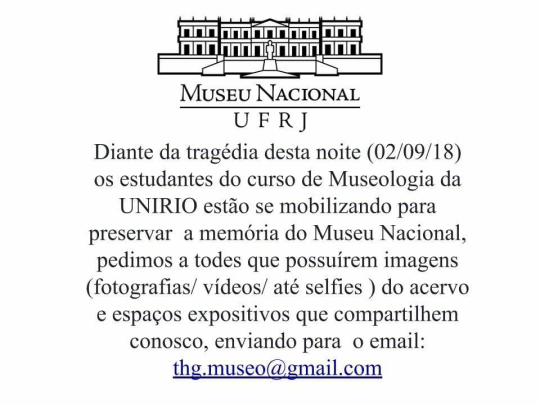
I’m translating this so any foreigners who have been to the national museum can help as well. Please reblog regardless of where you’re from.
“After tonight’s tragedy, museology students from UNIRIO(University of Rio de Janeiro) are trying to help preserve the memory of the brazilian national museum. We ask that those who have videos or pictures(and even selfies), of the collection share them through the e-mail thg.museo@gmail.com”
one more thing, i can’t help but notice that a lot of tumblr’s popular ideas about what 30+-year-old women — and it’s almost always women — should be doing instead of having fun online seem to line up pretty closely with very conservative beliefs about what women’s options should be. especially that women should have children and that once they have children their lives should revolve around those children completely, with no time for breaks or hobbies or internet discussion or other selfish, frivolous, unmotherly activities. to be a mother or a woman old enough to be expected to be a mother is to be a specially regulated class of person, judged by her performance as a self-sacrificing caregiver and exemplar of chaste maturity.
it’s hard to escape the influence of these ideas. but if you don’t hold yourself to this standard at age 22 or whatever, if you want more than what patriarchy has planned for you, then it’s worth it to try to let go of this standard when it comes to older women too. and not only because you will one day be one of them. but also because it’s the right thing to do.






 FantasyBoudicca